August 10, 2026
Trees add shade, beauty, privacy, and value to a property, but they can become hazardous when their health or structure declines. Damage is not always obvious from the ground, and a tree that appears stable may have internal decay, weakened roots, or poorly attached branches. Property owners may notice warning signs without knowing whether pruning, treatment, monitoring, or complete removal is the safest response. A professional assessment helps separate manageable concerns from conditions that create unacceptable risk.
Arborists evaluate more than whether a tree is alive or dead. They consider the species, age, location, history, visible defects, soil conditions, and the people or structures that could be affected if part of the tree failed. Removal is generally recommended when the likelihood and consequences of failure are too great to manage through other methods. Understanding the factors used during an assessment can help property owners make informed decisions before a dangerous condition becomes an emergency.
Evaluating Extensive Trunk Decay
The trunk supports the crown and transfers weight into the root system, so significant decay can weaken the entire tree. Cavities, soft wood, fungal growth, loose bark, and large areas of discoloration may indicate internal deterioration. Some trees can remain standing with limited decay because healthy wood continues to carry the load. However, the amount, location, and pattern of damage matter. Decay near the base or around a major union may present greater concern than a small, isolated cavity higher on the trunk.
According to the University of Maryland, tree removal should be considered if one-third of a tree's interior is hollow or decayed. An arborist may use visual inspection, sounding tools, resistance testing, or other methods to estimate how much sound wood remains. If the trunk can no longer support the crown reliably, a tree removal service may be recommended. The decision also depends on whether the tree could strike a home, road, utility line, or play area.
Assessing Root System Damage
Roots anchor the tree and absorb the water and nutrients needed for growth. Because most roots are underground, serious damage may develop without obvious warning. Construction, trenching, soil compaction, erosion, flooding, drought, and grade changes can reduce root stability. Surface clues may include lifting soil, exposed or severed roots, mushrooms near the base, thinning foliage, premature leaf drop, or a new lean. A tree can remain green even when its anchoring roots have been significantly compromised.
An arborist examines the root flare, surrounding soil, drainage, and recent site activity to determine whether the tree is securely anchored. The direction of the lean and the condition of the roots on the opposite side are especially important. When root loss is extensive or progressive, pruning may not provide enough risk reduction. In those cases, arranging a tree removal service can prevent the tree from uprooting during wind, saturated soil, or severe weather. Early assessment is important after excavation or storm-related root exposure.
Inspecting Major Structural Defects
Structural defects can develop where trunks divide, large limbs attach, or old injuries fail to close properly. Included bark, codominant stems, cracks, weak unions, and heavy horizontal branches may increase the chance of sudden breakage. Some defects remain stable for years, while others worsen as the tree grows and adds weight. Long cracks, fresh separation, hanging limbs, or movement at a union deserve prompt attention, particularly after a storm.
During an inspection, the arborist considers whether supports, pruning, or load reduction could lower the risk to an acceptable level. Cabling and bracing may help in selected situations, but they do not repair decay or guarantee that failure will not occur. If a major trunk or scaffold limb has a severe defect that cannot be managed safely, a tree removal service may be the most practical option. The arborist also considers how long mitigation is expected to remain effective.
Checking for Advanced Disease or Pest Damage
Diseases and insects can affect leaves, branches, bark, vascular tissue, or roots. Some problems are cosmetic or treatable, while others progressively weaken the tree. Warning signs may include canopy thinning, dead branches, unusual leaf color, oozing wounds, exit holes, sawdust-like material, cankers, or fungal fruiting bodies. The tree species helps an arborist determine whether symptoms are temporary, manageable, or associated with serious decline.
The assessment includes the extent of damage, the likelihood of recovery, and whether the condition could spread to nearby trees. Treatment may be worthwhile when the tree is structurally sound and the disease or pest can be controlled. However, when major tissues have been destroyed or the tree is rapidly declining, a tree removal service may reduce safety risks and limit further spread. Removing infected material promptly can also simplify cleanup before the tree deteriorates further.
Reviewing Storm and Weather Damage
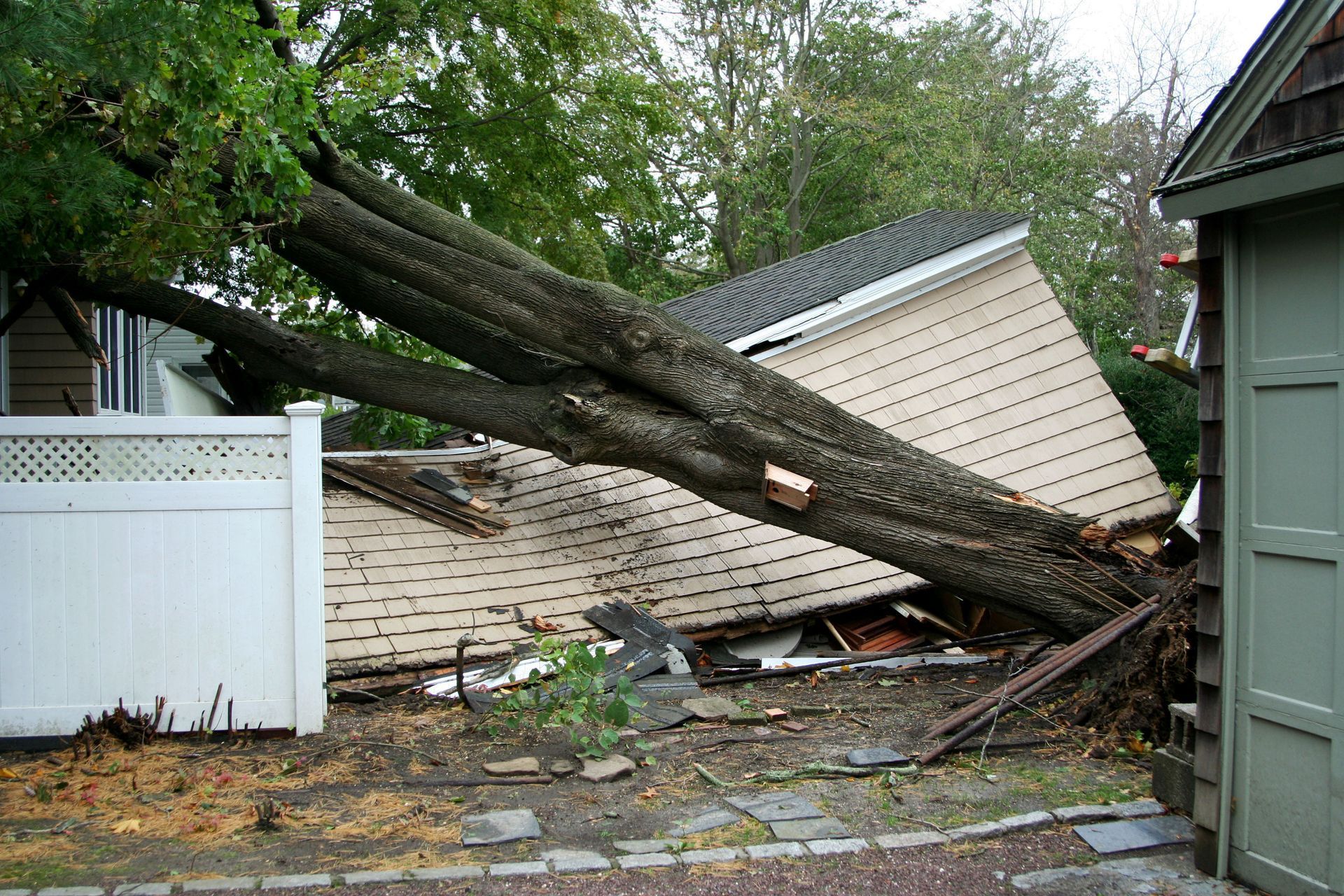
High winds, lightning, ice, heavy snow, and saturated soil can create immediate and delayed hazards. A storm may split a trunk, tear away major limbs, twist the crown, or loosen the root plate. Damage that appears dramatic is not always fatal, and some trees can recover with corrective pruning. At the same time, a tree that looks mostly intact may have hidden cracks, root movement, or internal stress that increases the chance of failure during the next weather event.
An arborist reviews the size and location of broken limbs, the percentage of the crown lost, and the stability of the remaining structure. Trees with balanced canopies and limited damage may be preserved, while those with severe trunk splits or major root movement often cannot be made reliably safe. Emergency tree removal service may be necessary when damaged wood is suspended over occupied areas or the tree is actively shifting. People and vehicles should remain away until the hazard is evaluated.
Considering the Tree's Location and Targets
Risk depends not only on the condition of the tree but also on what could be struck if it failed. A defective tree in an isolated area may be monitored, while the same defect beside a house, school, driveway, power line, or busy sidewalk may require faster action. Arborists refer to people, buildings, vehicles, and other valuable property within the potential impact zone as targets. How often the area is used also affects the seriousness of the risk.
The arborist estimates which parts of the tree could fail, how far they could travel, and how severe the consequences might be. Moving a target, restricting access, or pruning a particular limb may sometimes reduce the risk without removing the entire tree. When the target cannot be relocated and the defect cannot be corrected, a tree removal service may be the safest recommendation. This approach ensures that decisions reflect both tree condition and actual exposure.
Determining Whether Mitigation Is Practical
Removal is not the only response to a hazardous tree. Depending on the problem, an arborist may recommend pruning deadwood, reducing end weight, improving soil conditions, installing support systems, treating disease, or scheduling periodic inspections. The goal is to lower risk while preserving the tree when doing so is reasonable. The tree's value, expected lifespan, maintenance needs, and ability to respond to treatment all influence the recommendation.
Mitigation must provide meaningful and lasting risk reduction. A treatment that requires frequent, costly work or leaves a high likelihood of failure may not be practical. The arborist should explain available options, their limitations, and the expected level of residual risk. When no reasonable measure can make the tree sufficiently safe, removal allows the hazard to be addressed in a controlled manner. Professional crews can also plan equipment access, rigging, and debris handling around nearby structures.
Tree removal may become necessary when decay, root damage, structural defects, disease, storm injury, site conditions, or limited mitigation options create an unacceptable risk. Arborists evaluate the entire tree and its surroundings rather than relying on a single visible symptom. A timely assessment can clarify whether the tree can be treated, pruned, monitored, or should be removed before it fails. If a tree removal service is recommended, working with experienced professionals can help protect your property and those nearby. For professional help evaluating hazardous trees and choosing the safest course of action for your property, contact Saddletree LLC today.